
Government Urged to End Military-Led Approach in Deep South as Critics Warn of Prolonged Unrest
BANGKOK — Critics have warned that the military-led approach to handling the long-running conflict in Thailand’s southern border provinces may be prolonging unrest rather than resolving it, as the decades-old insurgency continues to claim lives and erode trust in the state.
Arson Attacks Strike Southern Thailand During PM Anutin’s Visit to Restive Region
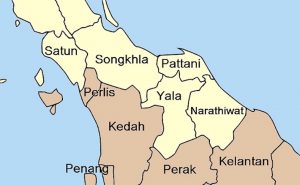
Since violence resumed in 2004, the conflict in Pattani, Yala and Narathiwat remains entrenched, rooted in historical grievances, identity differences and religious tensions involving separatist groups. According to Deep South Watch, a local think tank, more than 7,000 people have been killed in the unrest, which has devastated a region home to the majority of Thailand’s Malay Muslim population. The violence has led to the imposition of a prolonged security framework, with martial law and emergency decrees remaining in place for over 20 years. Critics argue that these measures, while aimed at maintaining order, have also contributed to deep mistrust and weakened confidence in the state among local communities.
Ekkarin Tuansiri, a political scientist at Prince of Songkla University’s Pattani campus, told Thai PBS World that despite civilian governments being in power, responsibility for the region has largely been left to security agencies. His remarks came as a top-ranking army officer, General Somsak Rungsita, was appointed to head the delegation for peace talks with the Barisan Revolusi Nasional, an umbrella organisation representing several insurgent groups. Ekkarin said the military-led approach reinforces a view that the state approaches the South primarily through a security lens. “The approach is still security-first,” he said, adding that political leaders have been reluctant to shift away from this framework.
Saharee Chelong, a prominent activist from the region, said many people feel they are not being treated as citizens but as potential threats. “When policies are designed around security, people start to feel like they are the enemy,” said Saharee, who previously served as an assistant to former Fair party MP Kannavee Suebsang. This perception, he explained, has shaped how communities view the state. Institutions such as the military, police and courts are often seen as a single, monolithic force rather than separate bodies with checks and balances. “As a result, trust in the system remains low,” he added.
Bomb Attacks Target 11 PTT Stations in Thailand’s Deep South, Four Injured
Under emergency powers, authorities can detain suspects for extended periods without charge, a provision that human rights advocates have long criticised as ripe for abuse. Several incidents have been linked to heavy-handed crackdowns by officials, including the 2004 clashes at the Krue Se Mosque and the notorious Tak Bai incident, in which 80 detainees suffocated to death while packed into military trucks. Saharee said investigations into violent incidents often fail to reach those believed to be behind them, particularly when they involve officials or former security personnel, deepening what many describe as a culture of impunity that allows abuses to continue without accountability.
Without addressing underlying issues, many believe that a security-driven approach alone is unlikely to bring lasting peace. According to a research paper titled “Counter Violent Extremism Concept in Thailand’s Southern Border Provinces: Origins, Problems and Prospects,” a mix of historical grievances, identity issues and governance challenges are key drivers of the unrest. The southern border provinces, with their distinct Malay Muslim identity, have long experienced tensions linked to centralised rule and cultural integration policies imposed from Bangkok. “The conflict is rooted in deeper issues beyond day-to-day violence,” Saharee added.
Both Saharee and Ekkarin said the government needs to rethink its strategy. Saharee called for greater decentralisation and more local control, including mechanisms that genuinely involve local communities in decision-making processes that affect their lives. Ekkarin, meanwhile, proposes moving away from emergency laws toward a peace-focused framework that allows broader participation beyond the security sector. He also calls for greater transparency in peace talks to rebuild public trust, noting that the current closed-door negotiations have done little to convince ordinary people that their concerns are being heard. “We can change from ’emergency’ rules to ‘peace’ rules,” he said, urging a fundamental shift in the government’s perspective.
Thailand Plans Security Wire Fence on Southern Border with Malaysia
Despite ongoing efforts and intermittent peace talks, both said meaningful change will depend on whether the government is willing to move beyond a military-led approach. For the families of the more than 7,000 people killed since 2004, and for the millions who live under emergency decrees that have now spanned two decades, the promise of peace has been deferred for too long. Whether Bangkok is finally ready to listen remains the central question. The answer will determine not just the fate of the deep South, but the character of Thai democracy itself.
-Thailand News (TN)