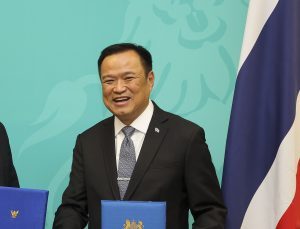
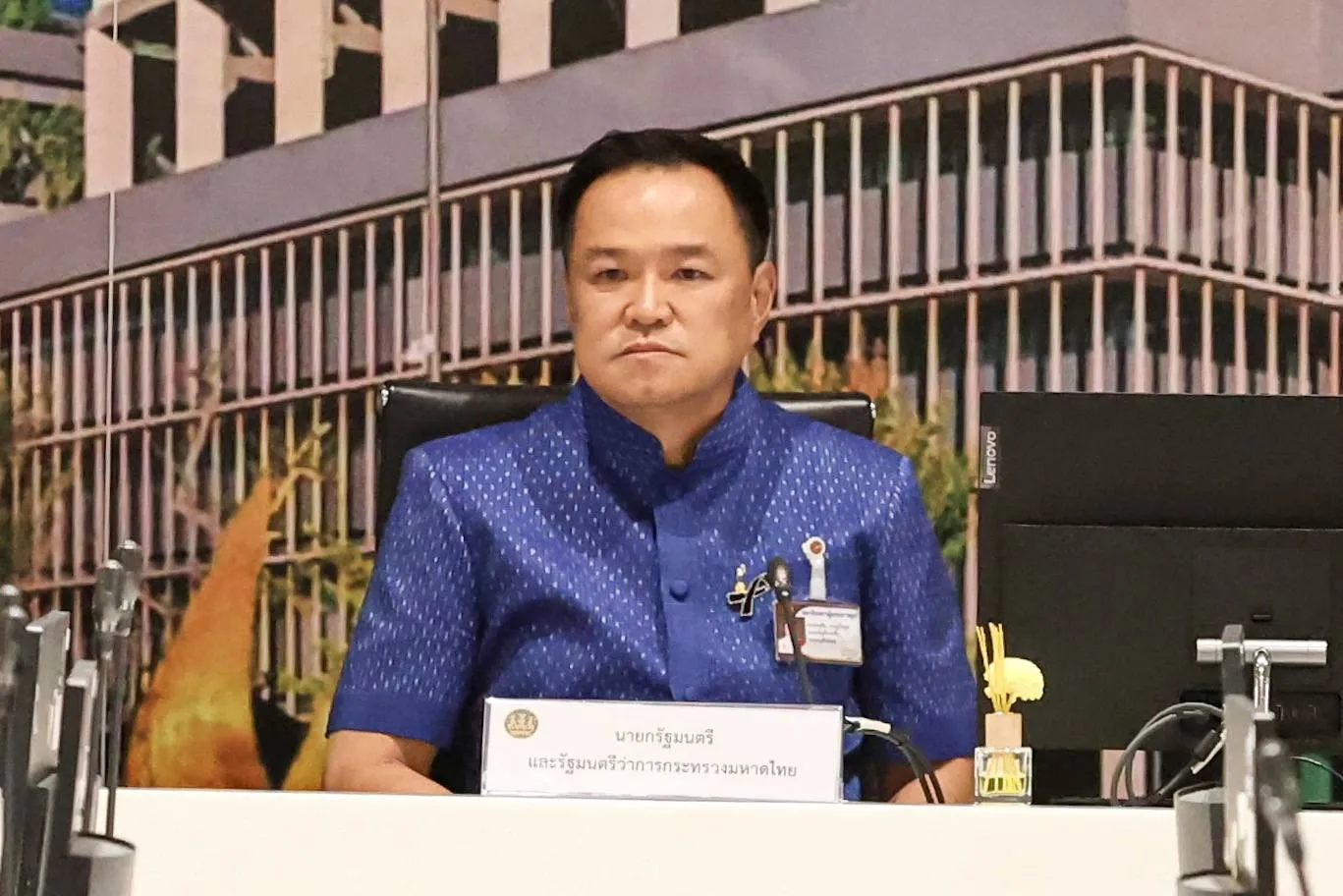
Anutin Charnvirakul Secures Second Term as Thailand’s 32nd Prime Minister
BANGKOK — Anutin Charnvirakul has been re-elected as Thailand’s prime minister after securing a decisive parliamentary majority on March 19, paving the way for his second consecutive term at the helm of the Southeast Asian nation .
Anutin Orders Thai Government Officials to Work From Home Amid Middle East Crisis
The House of Representatives convened a special sitting at 10am under Section 159 of the Constitution to select the new prime minister, with two candidates nominated for the position. Anutin, leader of the Bhumjaithai Party, faced off against Natthaphong Ruengpanyawut, leader of the People’s Party, in a vote widely watched as a defining moment in Thai politics following the February 8 general election .
When the results were tallied, Anutin had secured 293 votes, comfortably surpassing the required threshold of 250 votes from the 499 sitting members. Natthaphong received 119 votes, while 86 members abstained . House Speaker Sophon Saram officially announced the outcome at approximately 1.20pm before adjourning the session .
Vision of Unity
Before the vote, Anutin addressed the chamber, emphasising his commitment to collaborative governance. He expressed gratitude to MPs who endorsed his nomination while stressing that he regarded all representatives, regardless of their voting choice, as having equal dignity as representatives of the Thai people .
“I will be a prime minister who works with every representative of the Thai people to the fullest extent of my ability, so as to bring the greatest possible benefit and well-being to Thailand and its people,” Anutin pledged during his address .
He also referenced the royal address delivered by His Majesty the King at the opening of Parliament on March 14, stating that correctness and the well-being of the people must remain the highest priority to ensure parliamentary work proceeds in line with the constitutional path .
Bhumjaithai Party leader Anutin Charnvirakul was confirmed on Thursday as Thailand’s prime minister in a parliamentary vote that could usher in a rare period of stability for a country long plagued by political drama and turmoil.
Here is how the day unfolded:… pic.twitter.com/Hmrgir9vsS
— Bangkok Post (@BangkokPostNews) March 19, 2026
Coalition Strength
Anutin’s Bhumjaithai Party emerged as the strongest force in the February election, securing 192 seats, followed by the People’s Party with 120 seats and the Pheu Thai Party with 74 seats . The Bhumjaithai-led coalition now includes the Pheu Thai Party and 13 smaller parties, commanding an expected 292 seats in the 499-seat parliament .
Path to Endorsement
With the parliamentary vote complete, House Speaker Sophon Saram will now submit Anutin’s name for royal endorsement by King Maha Vajiralongkorn . Following formal appointment, the process of forming a new government will officially begin, including cabinet selection and qualification verification before submission for royal approval .
Under Article 162 of the Constitution, the new cabinet must deliver its policy statement to parliament within 15 days of assuming office .
Political Journey
The 59-year-old leader first entered politics in 1996 as an adviser to the foreign minister, later serving as deputy commerce minister and deputy public health minister from 2004 to 2006 . After a five-year political ban following the dissolution of the Thai Rak Thai Party, he returned in 2012 to lead the Bhumjaithai Party, succeeding his father Chavarat Charnvirakul .
Anutin previously served as prime minister from September 2025, succeeding Paetongtarn Shinawatra who was removed by court ruling over an ethics violation . He dissolved parliament in December following a threatened no-confidence motion, leading to the February snap election .
An engineer by training and heir to a major construction fortune, Anutin has also held portfolios as interior minister and public health minister, playing a key role in Thailand’s COVID-19 response .
Thai PM Anutin Orders Evacuation Flights for Thais in Mideast
Challenges Ahead
The incoming government faces immediate challenges including a fuel crisis driven by global energy price surges following the Middle East conflict, which has increased costs and raised concerns about potential shortages . Political uncertainty also looms, with the Constitutional Court accepting a petition that could potentially rule on whether last month’s election should be invalidated over ballot paper technicalities.
-Thailand News (TN)