Pakistan and Afghanistan at War Again: Cross-Border Conflict Escalates
ISLAMABAD/KABUL — Pakistan and Afghanistan are once again at war, with the Pakistani government declaring it has entered an “open war” with its neighboring country in a dramatic escalation that has already claimed more than 200 lives, marking the most serious incident between the two nations since the Taliban’s return to power in Kabul in 2021.
India-Pakistan: A hostile relationship
The conflict, which has its roots in colonial-era border disputes, has erupted into open hostilities following years of simmering tensions and accusations of harboring militant groups.
Historical Roots: The Durand Line
The Durand Line, a 2,640-kilometer border cutting through mountains and deserts that separates Afghanistan and Pakistan, has been a flashpoint for armed skirmishes and occasional shootings since 1949. The territorial dispute predates both nations and traces back to the decolonization process carried out by the United Kingdom.
The border was drawn in 1893, when the territory formed part of British India. Mortimer Durand, an official of the British Empire, established the line following an agreement between London and Afghan Emir Abdur Rahman Khan. The frontier divided the lands of Pashtun and Baloch peoples. Durand and Khan agreed not to exercise political interference beyond the boundary line between what was then the Emirate of Afghanistan and the British Indian Empire. Pakistan did not exist as a nation until 1947.
The Durand Line was reaffirmed in 1919 following Afghan independence. When Pakistan was established as a nation, it inherited the border agreement. However, Afghanistan has historically questioned the legitimacy of the frontier accord, arguing it was imposed through colonial pressure. Kabul has repeatedly attempted to claim Pakistan’s western provinces of Balochistan and Khyber Pakhtunkhwa.
As early as 1949, the Pakistani Air Force bombed militant camps sponsored by Afghanistan in border areas. In 1950, though on a small scale, Afghanistan invaded Pakistani territory.
Decades of Conflict
The 1979 Soviet-Afghan war drove millions of Afghans to seek refuge inside Pakistan. Following the Soviet withdrawal, the Taliban movement seized power in Kabul in 1996, establishing a government based on Sharia law. They were overthrown in 2001 by a US-led coalition, but the Taliban insurgency reignited in 2004.
Border skirmishes between Afghanistan and Pakistan intensified, with at least 35 armed incidents recorded between 2007 and 2021. On August 15, 2021, the Taliban captured Kabul following the withdrawal of NATO troops.
The Taliban Factor
The return of the Taliban to power changed little along the Durand Line. In fact, Taliban-led Afghanistan has become increasingly involved in border conflicts with Pakistan. Armed confrontations of varying intensity were recorded in 2021, 2022, 2023, 2024, and 2025.
Since the Taliban victory following the chaotic US withdrawal and their return to power in Kabul, Pakistan has faced a surge in Islamist violence. Islamabad blames the Pakistani Taliban militants, known as Tehreek-e-Taliban Pakistan (TTP), for much of this violence and accuses Kabul of providing them refuge on Afghan territory. Afghan authorities deny these claims.
The Pakistani Taliban (TTP)
The TTP emerged as an organization in 2007, when several armed groups active in northwestern Pakistan united. Pakistani Taliban have fought alongside their Afghan counterparts against US-led forces in Afghanistan and have hosted Afghan fighters in Pakistan. While distinct from the Afghan Taliban, the TTP shares deep ideological, social, and linguistic ties with them. The group has perpetrated attacks on markets, mosques, airports, military bases, and police stations.
Pakistan has announced the start of an open war with Afghanistan: overnight airstrikes targeted Taliban positions.
If Trump were president, this war would never have started. pic.twitter.com/vXqJkpIn1J
— Roman Sheremeta 🇺🇸🇺🇦 (@rshereme) February 27, 2026
Recent Escalation
In early October 2025, Pakistan bombed Kabul in an attempt to eliminate Pakistani Taliban leaders sheltering in the neighboring country. Afghanistan responded, resulting in the deadliest conflict between the parties in years.
Throughout 2025, more than 1,200 people, including military personnel and civilians, died in attacks across Pakistan, according to data shared with CNN by the Pakistani military. The October border confrontation ended that same month following a ceasefire that has now proven fragile.
The Current Conflict
Last week, Pakistan bombed Pakistani Taliban militant camps in Afghanistan, killing at least 18 people. On Thursday night, the Taliban army responded by attacking Pakistani positions along various sections of the border.
In response, on Friday Pakistan launched “Ghazab Lil Haqq” (Operation of Just Fury). “Our patience has run out. Now it is an open war between us and them,” Pakistani Defense Minister Khawaja Asif wrote on X.
Military Imbalance: Pakistan’s Superior Arsenal
There is a stark disparity between the Pakistani and Afghan militaries. The military remains Pakistan’s most powerful institution, having solidified its dominance throughout the country’s history through coups and constitutional amendments.
Pakistan possesses a sophisticated defense apparatus comprising an army, navy, air force, and marine corps. It maintains approximately 660,000 active-duty soldiers, reinforced by paramilitary and militarized police units totaling nearly 300,000 personnel, according to data from the International Institute for Strategic Studies (IISS) Military Balance 2025.
Its modern arsenal includes US-manufactured F-16 fighter jets, French Mirage aircraft, and the JF-17, produced jointly with China, Islamabad’s primary defense partner. Crucially, Pakistan possesses nuclear weapons. According to the Stockholm International Peace Research Institute (SIPRI), Pakistan holds approximately 170 nuclear warheads. As it continues to accumulate fissile material, its nuclear arsenal could expand over the next decade.
Afghanistan’s Asymmetric Force
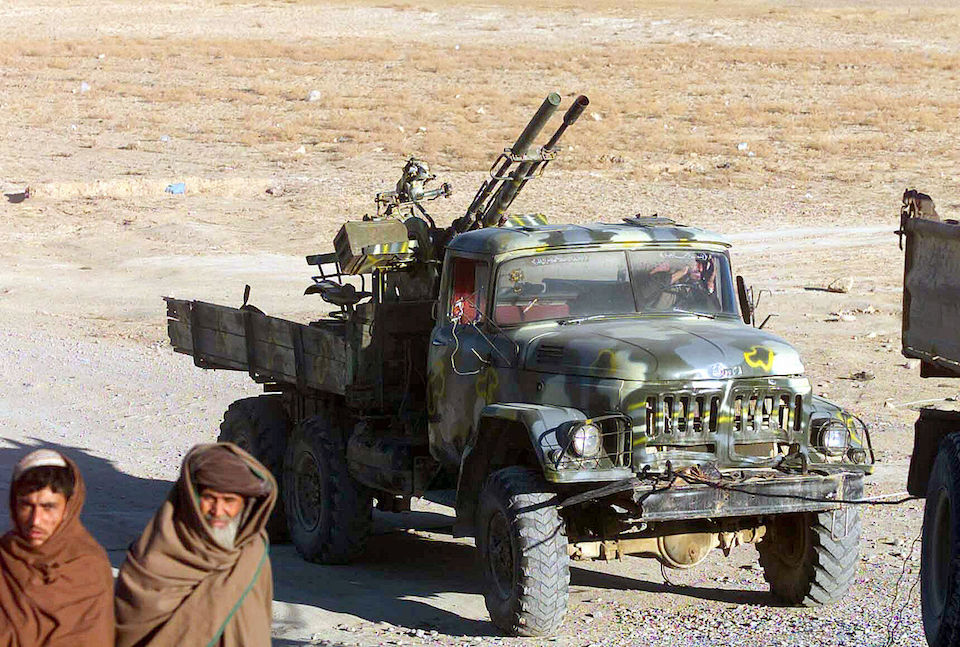
In contrast, Afghanistan possesses very limited conventional means but maintains a singular and unified fighting force. The Taliban are estimated to have somewhat fewer than 200,000 personnel. However, this army lacks a functional air force, relying on a handful of aging Soviet-era attack helicopters and transport aircraft abandoned during the US withdrawal, along with quadcopter drones.
While lacking the heavy weaponry of their Pakistani neighbor, guerrilla tactics remain a defining characteristic of their military identity. The force is hardened by ideological rigidity, religious fervor, and decades of asymmetric warfare experience.
Muslims attack Christian churches in Pakistan
Regional and Global Implications
The open warfare between the two nuclear-armed neighbors poses significant risks for regional stability, with potential consequences reaching far beyond their borders. The international community watches with growing concern as the conflict threatens to further destabilize an already volatile region.
Both nations have shown little indication of backing down, with the death toll continuing to rise and diplomatic channels appearing ineffective in de-escalating the crisis. The situation remains highly fluid as military operations continue along multiple sections of the contested border.
-Thailand News (TN)