Authorities Issue Warning After Toxic Jellyfish Sightings Along Phuket’s West Coast
PHUKET, Thailand — The Department of Marine and Coastal Resources has issued an urgent public safety advisory following confirmed sightings of highly toxic Portuguese man-of-war jellyfish along Karon Beach and other areas of Phuket’s western coastline, urging residents, tourists, and coastal business operators to exercise heightened vigilance.
40 Portuguese Man O War Jellyfish Found on Phuket Patong Beach
Minister of Natural Resources and Environment Suchart Chomklin directed the department to intensify marine safety monitoring and issue timely alerts, particularly during the active monsoon season when hazardous marine conditions and species movements are more prevalent. The directive aims to minimize public health risks associated with encounters with venomous marine organisms.
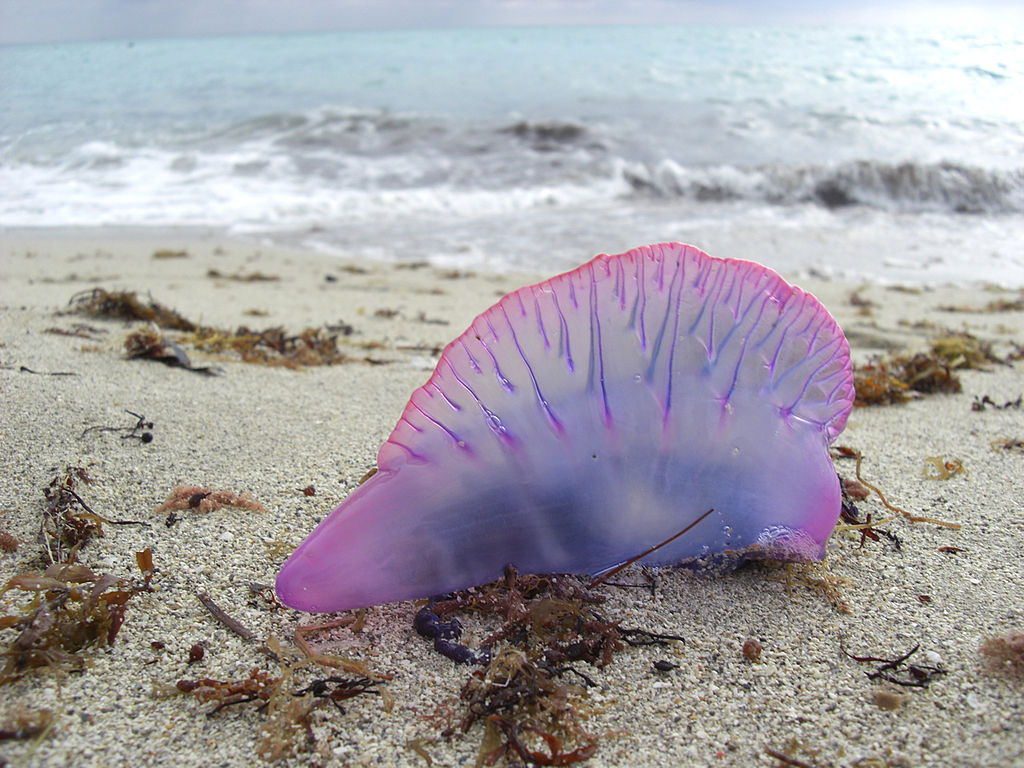
Marine scientists from the Upper Andaman Marine and Coastal Resources Research Center conducted an immediate field survey following alerts from local community networks and beach lifeguard services. The inspection took place during intense monsoon conditions characterized by strong winds and wave heights of two to three meters. Survey teams documented Portuguese man-of-war specimens with gas-filled floats measuring approximately two to three centimeters in length, distributed along tide lines at an average density of 0.5 individuals per 100 square meters.
The Portuguese man-of-war, despite its common name, is not a true jellyfish but a siphonophore—a colonial organism composed of specialized polyps working together. The species is renowned for its potent venomous tentacles, which can extend several meters beneath the water’s surface. Contact with these tentacles typically causes immediate, excruciating burning pain, localized skin lesions, and in severe cases, systemic symptoms including chest tightness, respiratory distress, or cardiovascular shock.
Local health officials have reported no confirmed injuries or severe envenomation cases related to the recent sightings. Nevertheless, authorities have implemented precautionary measures to ensure public safety. The Department of Marine and Coastal Resources has coordinated with local rescue networks, professional beach lifeguards, and medical facilities to enhance coastline monitoring, prepare rapid-response medical teams, and distribute official public safety materials outlining appropriate first-aid procedures for marine stings.
⚠️ Warning: Portuguese Man o' War spotted on #Phuket beaches. Don't touch them — even dead ones can sting. Rinse with seawater if stung and seek medical help immediately. 🇹🇭🌊 pic.twitter.com/iSagMV41Dc
— Khaosod English (@KhaosodEnglish) May 29, 2026
Recommended first-aid measures for Portuguese man-of-war stings include rinsing affected areas with vinegar to neutralize unfired nematocysts, avoiding freshwater or rubbing the wound, carefully removing visible tentacle fragments with tweezers or a gloved hand, and seeking immediate medical evaluation for severe reactions. Heat immersion at tolerable temperatures may help alleviate pain in some cases.
Phuket’s western beaches, including Karon, Kata, and Patong, attract significant numbers of domestic and international visitors throughout the year. During the monsoon season, which typically extends from May through October, rough seas, strong currents, and increased presence of hazardous marine species necessitate enhanced safety awareness among beachgoers.
Tourism authorities have advised visitors to heed warning flags posted at monitored beaches, avoid entering the water during adverse conditions, and consult with lifeguards regarding current marine hazards. Beach operators have been encouraged to maintain clear signage and communication channels to inform guests of potential risks.
The Royal Thai Navy and Marine Police maintain regular patrols along Phuket’s coastline to support search-and-rescue operations and enforce maritime safety regulations. Coordination between national agencies, provincial authorities, and local communities remains central to effective risk management during seasonal environmental changes.
Lifeguards Warn About Poisonous Jellyfish at Phuket Beaches
For travelers planning beach activities in Phuket, the Tourism Authority of Thailand recommends checking daily marine condition reports, purchasing comprehensive travel insurance that covers medical emergencies, and familiarizing oneself with basic first-aid protocols for common tropical hazards.
-Thailand News (TN)