Headless Body of Muslim Who Spoke to Journalists Found in Myanmar’s Maungdaw
The decapitated body of a Muslim man from a village in Myanmar’s volatile Maungdaw township where a deadly attack on border guard police occurred in early October was found floating in a river a day after he had spoken with reporters who visited the area, a Rakhine state government official said on Friday.
The dead villager, Shuna Mya, told reporters on a government-guided visit to the area stories he had heard from local residents who said they had witnessed atrocities being committed by security forces that moved into northern Rakhine state to look for insurgents after the Oct. 9 attacks that left nine policemen killed.
Shuna Mya lived in Ngakhura village, where one of the attacks on three area border guard stations took place. He answered questions posed by reporters from independent media organizations who visited Maungdaw on Dec. 21. An RFA Myanmar Service report was on the trip and spoke to Shuna Mya.
Villagers said they saw a group of people go to his house around midnight on the same day, and that Ngakhuya had been missing since Thursday morning.
“We found Shuna Mya’s body today at 12:38 p.m.,” said Tin Maung Swe, secretary of the Rakhine state government. “He answered reporters’ questions on Dec. 21 and left his home at around 6 p.m. that evening and didn’t come back until morning.”
“Family members had been looking for him since around 7 a.m. on Dec. 22 and found his body without a head at noon,” he said.
Shuna Mya also met with the government’s Rakhine Investigation Commission during its visit to the area in mid-December to probe the behavior of the military during security operations in Muslim-majority areas amid accusations by Rohingya Muslims that soldiers had raped, tortured and killed villagers and burned down their homes.
“As he had no problems in the village, it seems he was killed because he answered reporters’ questions,” Tin Maung Swe said.
“Although we can’t say who exactly did it, it could be the Muslim insurgents who are living nearby in villages [under the guise of] villagers,” he said.
The Myanmar government allowed a group of 13 selected journalists to tour the affected areas for three days this week following pressure from rights groups, Western countries, and the United Nations to let them look into accusations of atrocities against the stateless Rohingya.
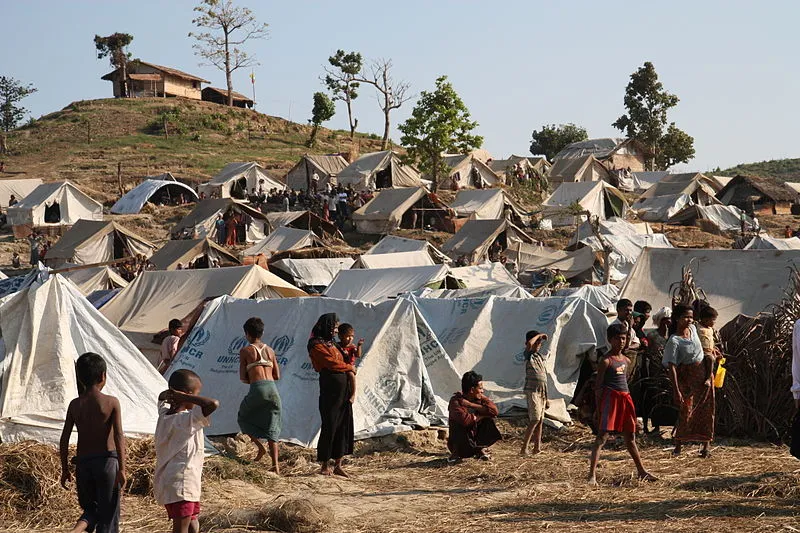
The area has been under lockdown since the border guard station raids and subsequent violence between security forces and armed men that forced 27,000 Rohingya villagers to flee to neighboring Bangladesh.
The government has blamed the attacks on militant Rohingya, but denied that national soldiers have violated any regulations during the security operations.
Full story: rfa.org
Reported by Min Thein Aung, Waiyan Moe Myint and Thin Thiri for RFA’s Myanmar Service. Translated by Khet Mar. Written in English by Roseanne Gerin.
Copyright © 1998-2016, RFA. Used with the permission of Radio Free Asia, 2025 M St. NW, Suite 300, Washington DC 20036. http://www.rfa.org.