
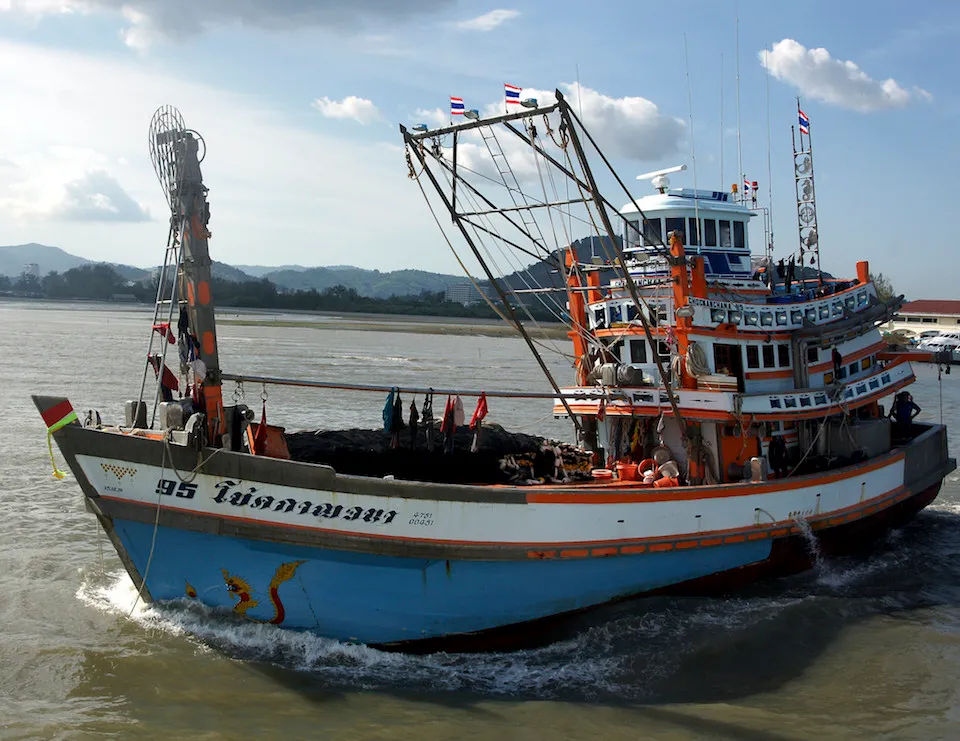
Rising Fuel Costs Force Fishing Fleets Across Thailand to Dock
BANGKOK – Fishing fleets across Thailand are grinding to a halt as surging fuel prices and persistent shortages push operating costs beyond sustainable levels, threatening the livelihoods of thousands of fishermen and the stability of coastal economies.
Thailand’s Fishing Industry Grinds to Halt as Diesel Shortages Bite
Phubet Jantanimi, honorary adviser to the Purse Seine Fishery Association, said approximately 40 percent of the country’s 9,000 registered fishing vessels have already been forced to dock as operators struggle to absorb escalating expenses linked to “green oil”, the subsidised fuel designated for the fisheries sector.
“If oil prices continue to rise, all boats may have to dock because operators cannot absorb costs that have more than doubled,” he warned. Production costs have climbed to as much as 2 million baht per vessel per month, compared with approximately 1.5 million baht previously, squeezing operators already operating on thin margins.
Fuel prices for fisheries have risen sharply from 18–20 baht per litre to around 34 baht, with mounting concerns that prices could climb even higher. Fishing vessels typically consume between 1,000 and 10,000 litres of fuel per trip, depending on the distance traveled and the size of the operation, making them particularly vulnerable to price fluctuations.
Supply Shortages Compound Crisis
Mr Phubet highlighted a critical secondary issue: fishermen cannot reliably find fuel even when they are willing to pay the elevated prices. Suppliers have limited stock while petrol stations restrict sales, leaving vessels stranded at port. “Without operating, vessels risk damage,” he added, noting that prolonged inactivity can lead to mechanical deterioration and additional financial losses.
In Phuket, the crisis has already disrupted both large-scale commercial operators and small-scale fishing families, with widespread implications for the province’s seafood supply chain.
Somyot Wongboonyakul, president of the Phuket Fisheries Association, delivered a stark assessment of the industry’s prospects. “Large operators have already started docking their boats. If fuel remains above 30 baht per litre, the sector will not survive,” he said.
He illustrated the financial strain with a simple calculation: a pair of trawlers using approximately 40,000 litres of fuel each month would face an additional 400,000 baht in costs for every 10-baht increase per litre. “We are losing 300,000–400,000 baht a month if we go out,” he said, adding that weaker consumer demand has further limited the ability to pass on higher costs to buyers.
Soaring fuel prices are leaving many Thai fishermen unable to put to sea, with boats tied up and incomes disappearing across coastal Thailand. Higher diesel costs have made fishing trips unviable despite tax relief, forcing workers to return home or seek other jobs. In ports such… pic.twitter.com/Oytk40G1cC
— Bangkok Post (@BangkokPostNews) March 20, 2026
Small-Scale Fishermen Also Affected
Small-scale operators, who form the backbone of many coastal communities, are also under intense pressure. In the Na Kluea community of Chon Buri, local fishermen have begun suspending trips due to fuel shortages that make even short journeys economically unviable.
Somkid Jittakawan, a representative of small-scale fishermen, described the daily struggle: “When some petrol stations run out or close, we cannot refuel, forcing boats to stop temporarily.” Although many are still attempting to operate to maintain some income, rising costs are steadily eroding whatever margins remain.
Fishermen warned that a prolonged disruption could significantly reduce seafood supply across domestic markets, pushing prices higher for consumers already grappling with broader economic pressures. The cascading effects would extend from boat operators to fishmongers, market vendors, and ultimately to Thai households.
Calls for Government Intervention
Operators have called on the government to intervene urgently by capping fuel prices at sustainable levels and ensuring sufficient supply reaches fishing communities. Some have proposed reducing prices to 19–20 baht per litre and introducing support measures similar to past subsidy schemes that helped stabilize the industry during previous crises.
Thailand Allows 24-Hour Fuel Deliveries to Ease Nationwide Shortages
Without swift and decisive action, industry representatives warned that widespread shutdowns could follow, affecting not only the immediate livelihoods of fishing families but also the broader coastal economies that depend on a steady flow of seafood and related industries. For now, hundreds of vessels remain tied to docks across the country, their operators waiting for a resolution that has yet to arrive.
-Thailand News (TN)